HEAT TREATMENT COVENTRY LTD
Case Hardening Services
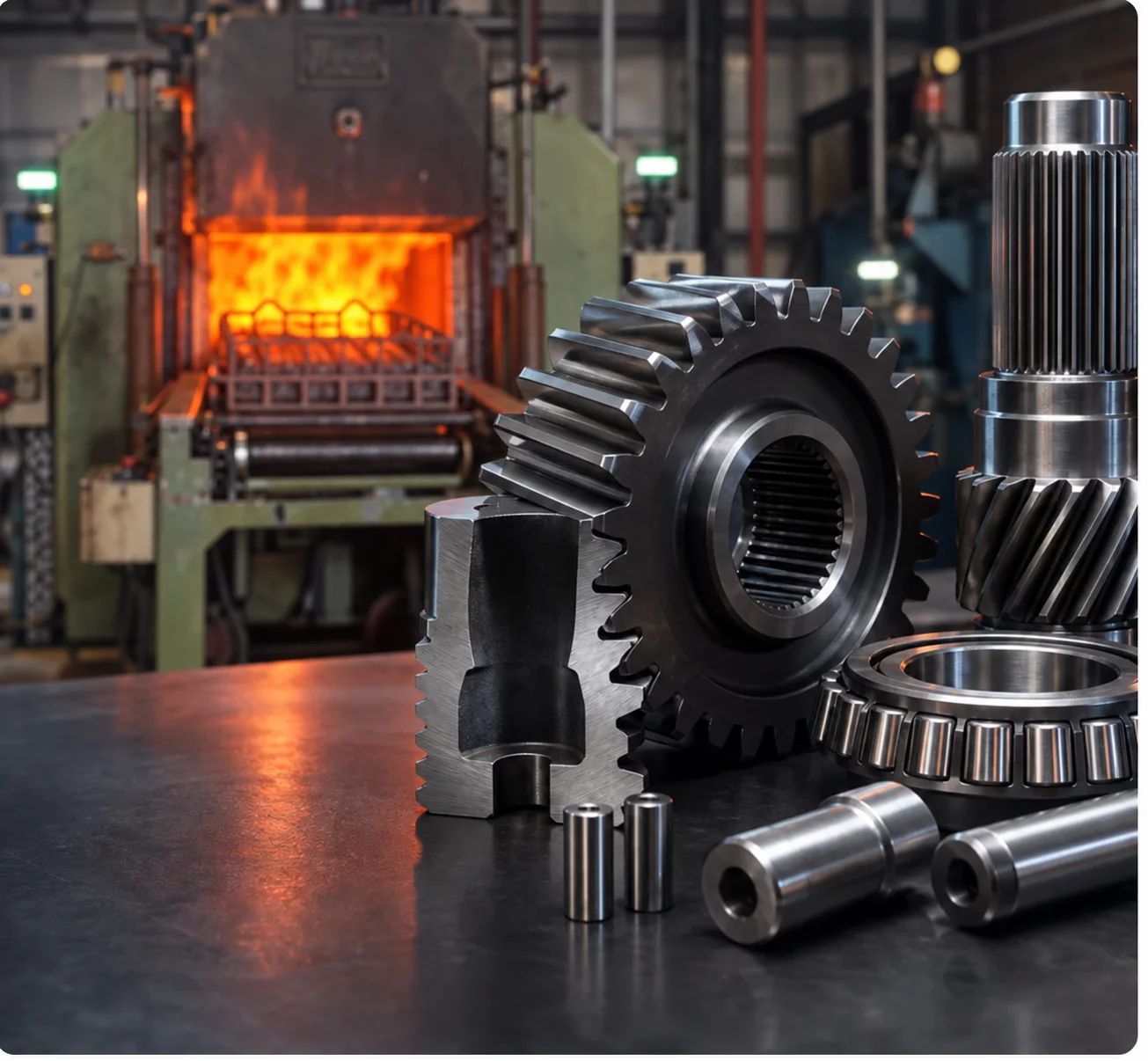
Case hardening is used where a hard, wear-resistant surface is required together with a tougher supporting core.


HEAT TREATMENT COVENTRY LTD
Case hardening is used where a hard, wear-resistant surface is required together with a tougher supporting core.
ATMOSPHERIC HEAT TREATMENT
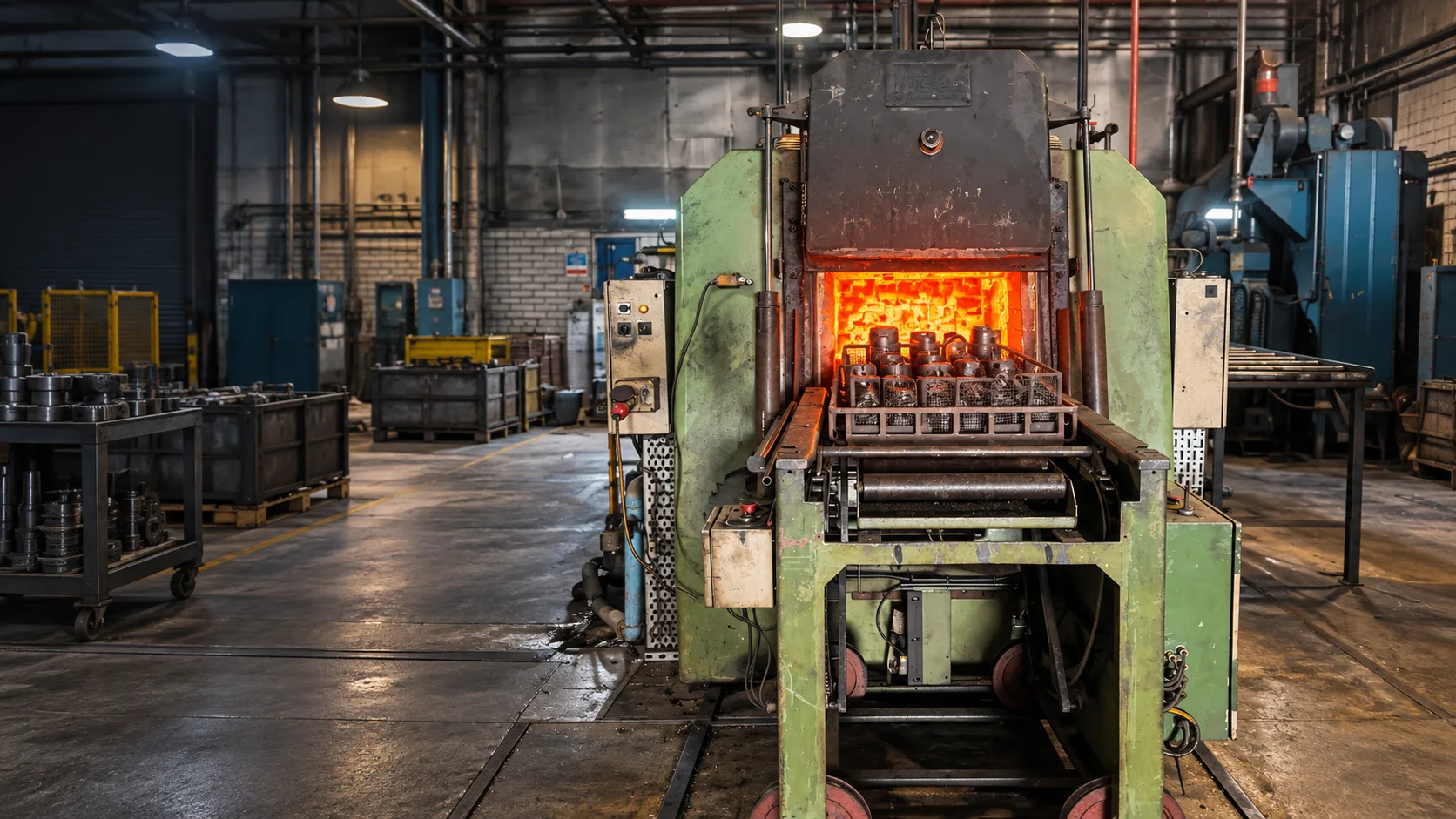
This service sits within HTC’s atmospheric heat-treatment offering for manufacturers and engineering supply chains. The furnace environment and thermal cycle are controlled for repeatable results appropriate to the component and specification. Exact atmosphere, capacity and process parameters are confirmed only after technical review.
01
Case hardening is a family of treatments that changes the properties of the component surface more strongly than the core. Depending on the steel grade and specification, an appropriate case-hardening route may include carburising or carbonitriding followed by hardening and tempering.
02
The selected process introduces carbon, or carbon and nitrogen, at the surface before a controlled hardening cycle. The resulting case depth and hardness depend on material, time, temperature, quench route and the stated drawing or customer specification.
03
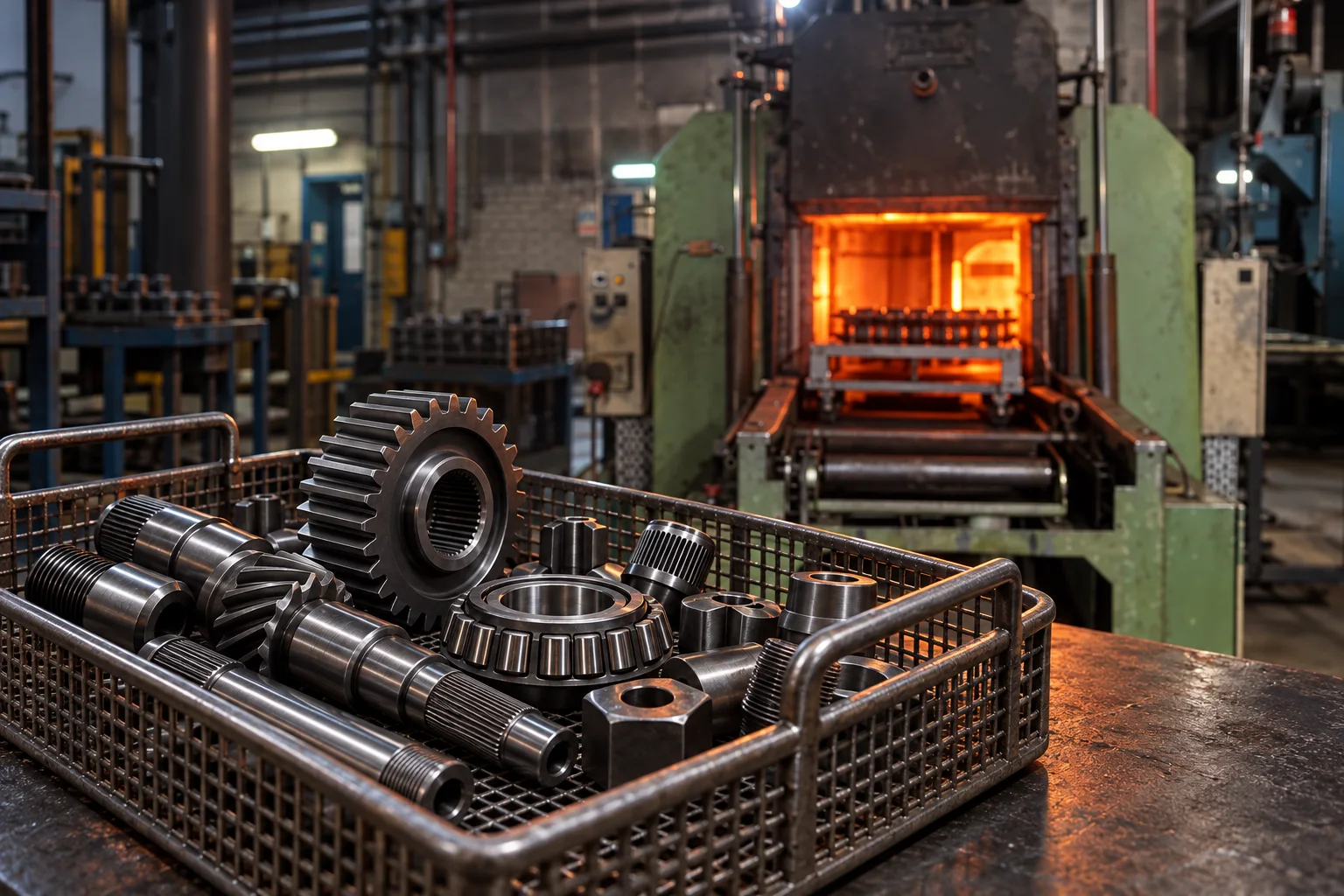
Engineers commonly specify case hardening to improve resistance to wear, surface fatigue and indentation while retaining useful toughness beneath the surface.
04
05
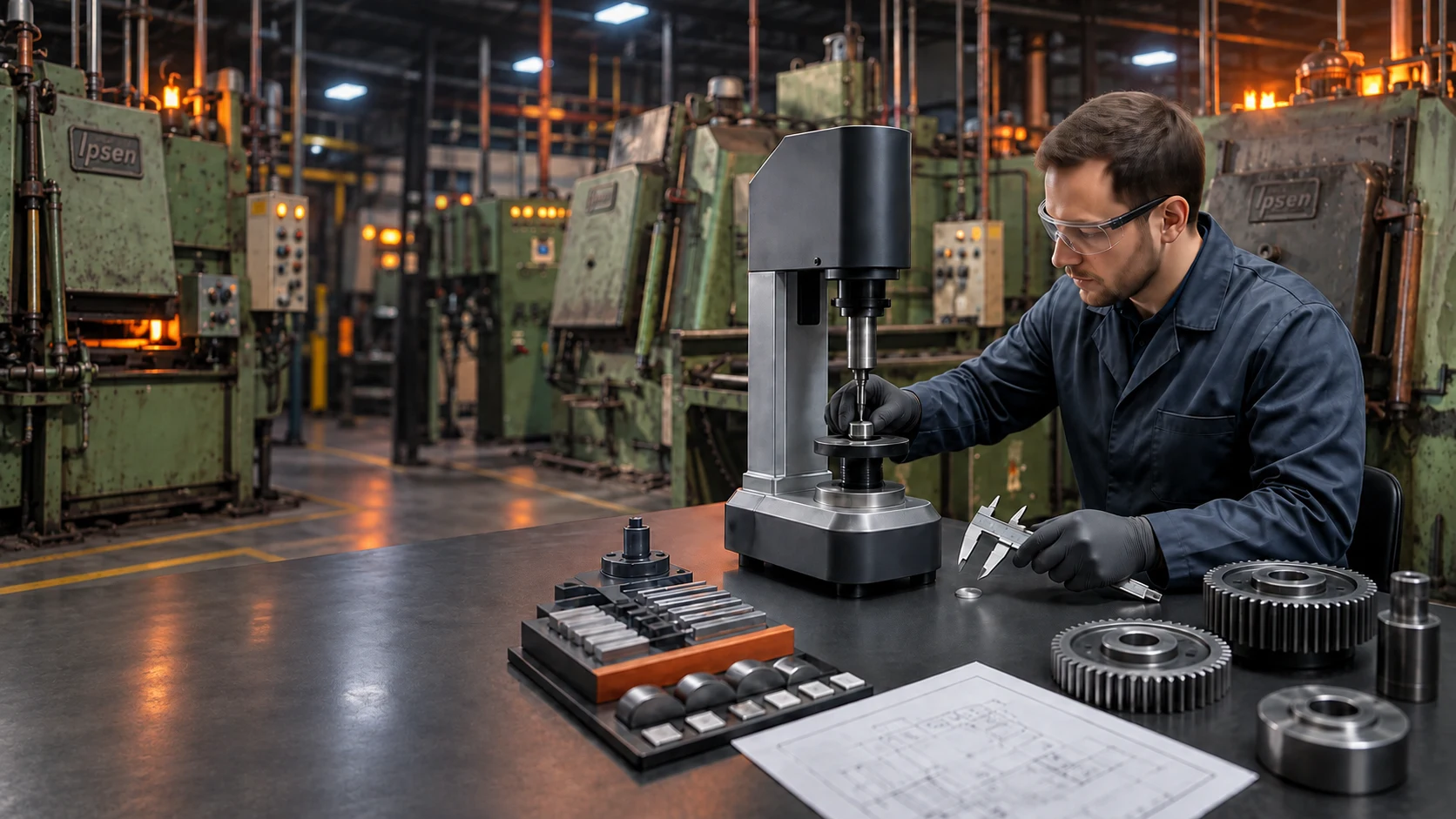
A useful enquiry identifies the steel grade, required effective or total case depth, surface hardness, core property, areas to be protected and any relevant drawing or standard.
Important: suitability depends on the exact material grade, component condition, geometry and required specification. Please provide these details for technical review before treatment.
Not every component needs the same thermal cycle. Explore our full heat-treatment services or discuss the drawing and performance requirement with our team.
Carburising is one route used to produce a hardened case. The correct terminology depends on the specified process and material.
Please provide the material grade, quantity, dimensions, case-depth and hardness requirement, drawing and any masking or finishing requirements.
No. Response varies with steel composition and prior condition, so the exact grade and specification must be reviewed.
Tell us the process, material or steel grade, quantity, component dimensions and required specification. We will review the information and advise on the next step.